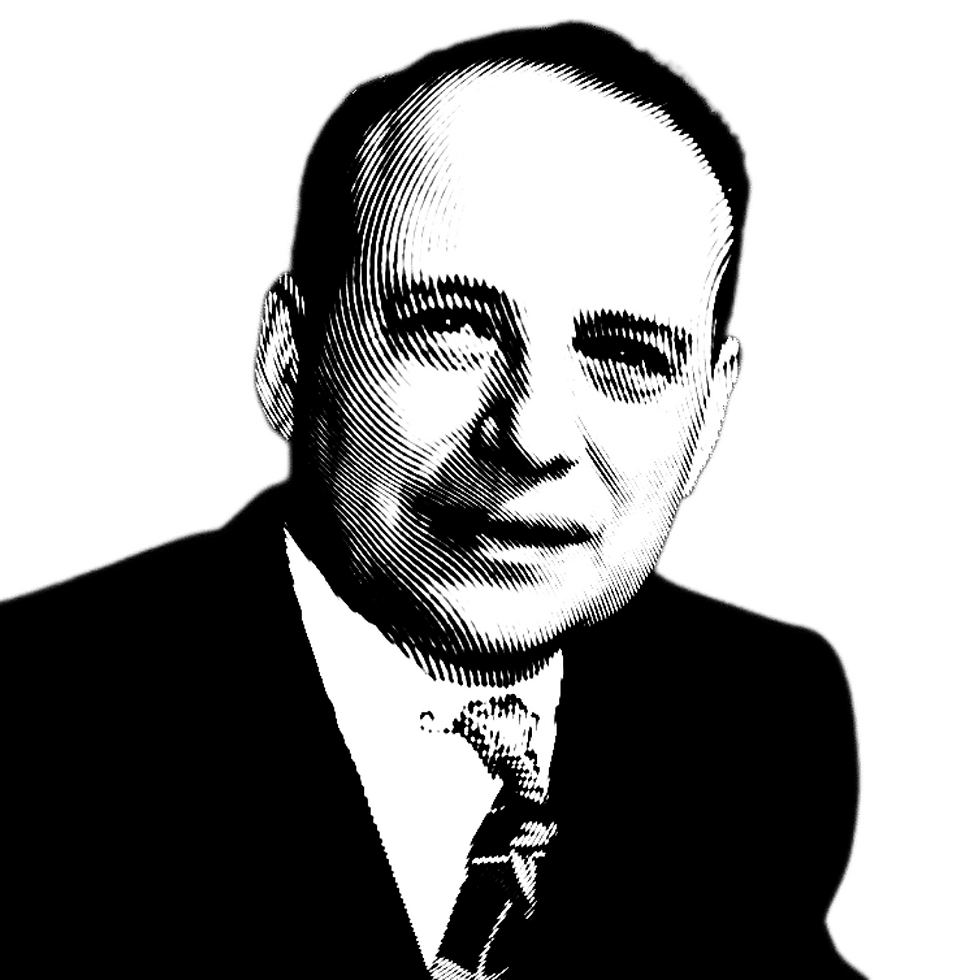
Charlie Munger - Think about the stock market this way and you will beat it
- Marek Hruby
- Aug 24, 2024
- 5 min read
Updated: Sep 21, 2024
Key takeaways at the end
""
The first question is, what is the nature of the stock market? And that gets you directly to this efficient-market theory that got to be the rage – a total rage long after I graduated from law school. [...]
By definition, everybody can't beat the market. As I always say, the iron rule of life is that only 20 percent of the people can be in the top fifth. That's just the way it is. So the answer is that it's partly efficient and partly inefficient. [...]
The model I like – to sort of simplify the notion of what goes on in a market for common stocks – is the pari-mutuel system at the racetrack. If you stop to think about it, a pari-mutuel system is a market. Everybody goes there and bets, and the odds change based on what's bet. That's what happens in the stock market.
Any damn fool can see that a horse carrying a light weight with a wonderful win rate and a good post position, etc., etc., is way more likely to win than a horse with a terrible record and extra weight and so on and so on. But if you look at the damn odds, the bad horse pays 100 to 1, whereas the good horse pays 3 to 2. Then it's not clear which is statistically the best bet using the mathematics of Fermat and Pascal.
The prices have changed in such a way that it's very hard to beat the system. And then the track is taking 17 percent [handle] off the top. [...]
It's efficient, yes. But it's not perfectly efficient. And with enough shrewdness and fanaticism, some people will get better results than others. The stock market is the same way, except that the house handle is so much lower. If you take transaction costs – the spread between the bid and the ask plus the commissions – and if you don't trade too actively, you're talking about fairly low transaction costs. So, with enough fanaticism and enough discipline, some of the shrewd people are going to get way better results than average in the nature of things. [...]
It's not given to human beings to have such talent that they can just know everything about everything all the time. But it is given to human beings who work hard at it – who look and sift the world for a mispriced bet – that they can occasionally find one. And the wise ones bet heavily when the world offers them that opportunity. They bet big when they have the odds. And the rest of the time, they don't. It's just that simple.
[...] A huge majority of people have some other crazy construct in their heads. And instead of waiting for a near cinch and loading up, they apparently ascribe to the theory that if they work a little harder or hire more business school students, they'll come to know everything about everything all the time. To me, that's totally insane.
How many insights do you need? Well, I'd argue that you don't need many in a lifetime. If you look at Berkshire Hathaway and all of its accumulated billions, the top 10 insights account for most of it. And that's with a very brilliant man – Warren's a lot more able than I am and very disciplined-devoting his lifetime to it. I don't mean to say that he's only had 10 insights. I'm just saying that most of the money came from 10 insights.
So you can get very remarkable investment results if you think more like a winning pari-mutuel player. Just think of it as a heavy-odds-against game full of bullshit and craziness with an occasional mispriced something or other. And you're probably not going to be smart enough to find thousands in a lifetime. And when you get a few, you really load up. It's just that simple.
When Warren lectures at business schools, he says, "I could improve your ultimate financial welfare by giving you a ticket with only 20 slots in it so that you had 20 punches, representing all the investments that you got to make in a lifetime. And once you'd punched through the card, you couldn't make any more investments at all." He says, "Under those rules, you'd really think carefully about what you did, and you'd be forced to load up on what you'd really thought about. So you'd do so much better." [...]
All right, we've now recognized that the market is efficient as a pari-mutuel system is efficient – with the favorite more likely than the long shot to do well in racing but not necessarily give any betting advantage to those who bet on the favorite.
Poor Charlie's Almanack (2023); Chapter Four; Talk Two
* Bold emphasis added
""
Key concepts and takeaways:
Stock market is a pari-mutuel system: The stock market is partly efficient, in a similar way a pari-mutuel system is. Pari-mutuel system works on the basis of odds. The higher the probability (which is based on what other participants think), of a [football team] winning a [game], the lower are the odds / pay-out in case [the football team] actually wins. Similarly, share price of a stock will very often reflect what the other participants, "the market" thinks. You must never forget that there are likely hundreds of other sophisticated participants looking at the same stock and these participants are collectively working with a lot of public information. The good news is that to do well, you do not have to outsmart the other participants all the time on all the stocks.
Wait for the attractive odds: The task at hand in the stock market is to wait for the few, (sometimes obviously) mispriced stocks. The reasons for mispricing can be either behavioural or technical or both. Behavioural mispricing occurs when the market over-reacts to negative news or the stock can be out-of-favor due to the bandwagon effect. Technical reasons could be an exclusion from an index where funds tracking a particular index need to sell the stock. But how do you know when this is actually the case vs. the stock is trading at that price for a good reason?
Beware of conflict of interests: As Charlie says, this approach goes against the dogma of action and diversification. Whenever you are urged to act by a "helper", be it a gamified trading platform, a fund manager, or a bank representative, remember that they profit from your action, not from your returns.